
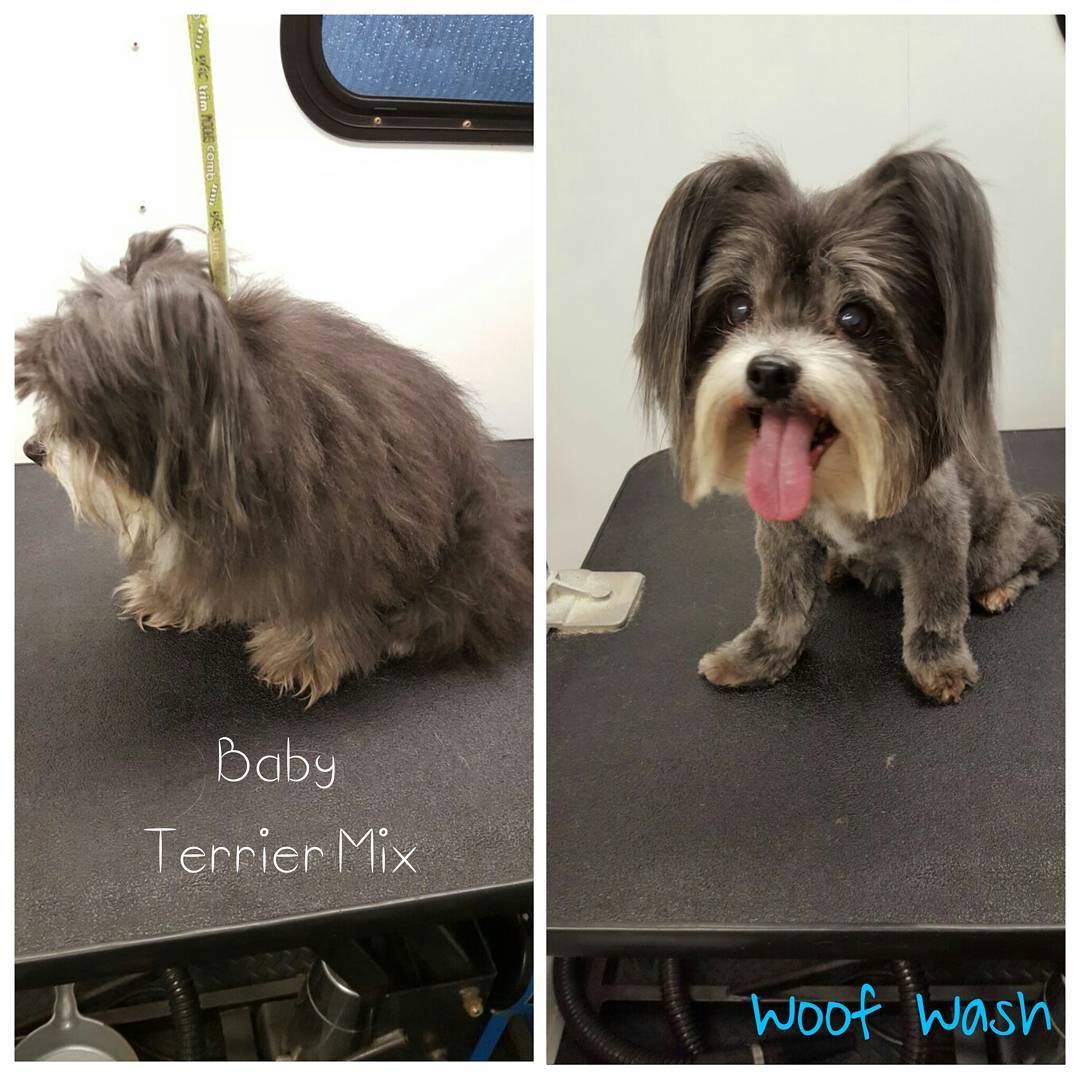
If you’ve ever run a brush through your dog’s coat and hit a tangle that just won’t give, you already know the feeling. It’s tempting to tug a little harder, or just to let it go until the next bath fixes it. Neither really works, and the second one usually makes things worse. Mats don’t stay small. Left alone, a thumbnail-sized knot behind the ear or under a front leg can grow into a solid pad of felted fur in a matter of weeks — and by then, it’s not a cosmetic problem anymore.
What a mat actually is (and why it hurts)
A mat forms when loose hairs — the undercoat your dog is constantly shedding, plus whatever gets picked up on a walk — get caught in the topcoat instead of falling away. Every bit of movement twists those strands tighter around each other. Within a few days you get a tangle. Within a few weeks, especially in areas with constant friction like the armpits, behind the ears, under the collar, and around the tail, that tangle can compact into something closer to felt than fur.
Here’s the part a lot of people don’t realize until they’ve seen it up close: a mat doesn’t just sit on top of the skin. As it tightens, it pulls. Imagine a section of your own hair twisted into a knot and left there for a month, getting a little tighter with every brush of a sleeve or seatbelt. That’s roughly what a mat does to a dog’s skin, except a dog can’t just reach up and loosen it. Severe mats can restrict blood flow to the skin underneath, and we’ve seen cases where the skin itself was irritated, inflamed, or broken by the time the mat was found — usually hidden under a coat that looked fine from a few feet away.
Matted fur also traps moisture against the skin after a bath, a swim, or just a rainy walk. That dark, damp little pocket is exactly the environment that skin infections and hot spots like to grow in. So a dog with heavy matting isn’t just uncomfortable — they’re carrying a hidden risk of infection that usually doesn’t show up until it’s already inflamed, sore, and considerably more unpleasant to treat than it would have been to prevent.
Why it’s painful, not just annoying
It’s easy to assume a dog would show obvious distress if something hurt. In practice, dogs are good at masking discomfort, and matting builds up slowly enough that there’s rarely one dramatic moment where it clearly starts to hurt. What you’ll usually see instead is more subtle: flinching or shifting away when you touch a specific spot, reluctance to be brushed at all, a dog that suddenly doesn’t want its collar adjusted, or excessive licking and chewing at one area. Those are all worth paying attention to, especially if they show up around the same places mats tend to form.
Severe, long-neglected matting is a genuine welfare issue, not an exaggeration groomers use to sell services. In the worst cases we’ve encountered, matting was tight enough to restrict a dog’s normal movement, and removing it safely meant clipping the coat very short because there simply wasn’t a way to comb it out without causing more pain than a clean shave. That outcome is avoidable almost every time with a brushing routine that takes a few minutes, a few times a week.
A brushing routine that actually prevents mats
The right tool and technique depend a lot on coat type, so take the specifics below as a starting point rather than a one-size-fits-all rule. A groomer who has actually seen your dog’s coat can tell you what will work best.
- Brush before a bath, not just after. Water tightens existing tangles, so bathing a dog with loose knots can turn them into real mats almost instantly.
- Use a slicker brush for the topcoat and a metal comb to check your work — if the comb glides all the way through to the skin without catching, that section is actually mat-free. Fur that looks brushed on the surface can still be tangled underneath.
- For double-coated breeds, an undercoat rake a couple of times a week does more to prevent matting than daily surface brushing alone, since most mats start in the undercoat, not the topcoat.
- Pay extra attention to friction zones: behind the ears, in the armpits, around the collar, the tail base, and behind the back legs. These spots mat first and fastest.
- Work in thin sections and support the hair close to the skin with your free hand while you brush, so you’re not pulling directly on the skin if the brush catches.
- If you find a small tangle, work it out gently with your fingers first, then the comb, before reaching for scissors or a brush on it directly.
When to stop and call a professional
If a mat is close to the skin, if your dog yelps or pulls away when you touch it, or if you can see redness, swelling, or broken skin anywhere near it, stop trying to brush it out yourself. At that point, a dog is better served by a groomer with the right tools and the patience to work carefully — or, if the skin is already irritated, a veterinarian first. Trying to force a comb through a painful mat usually teaches a dog to dread brushing altogether, which only makes the next tangle harder to deal with.
This is also exactly the kind of situation mobile, one-on-one grooming tends to handle more calmly than a busy salon. Without other dogs barking nearby or a long wait in a crate, a nervous or sore dog has a much easier time tolerating the slow, careful work that safe de-matting actually requires. Sometimes de-matting isn’t possible without causing real discomfort, and the kindest option is a shorter clip to start fresh — that’s not a failure, it’s the right call when a dog’s comfort is the priority.
The short version
A few minutes of brushing, a couple of times a week, costs you almost nothing. Ignoring it can cost your dog real pain, skin problems you won’t notice until they flare up, and a grooming visit that’s far less pleasant than it needed to be. Mats are one of the few coat problems that are genuinely easier to prevent than to fix — so it’s worth building the habit before the first knot shows up, not after.